How to Practice Gratitude Through Daily Cooking and Dining Rituals
By the QuiteRecipes team (Jamy & Kaïna)
Gratitude doesn't need a journal landing page. Practice it in the kitchen: trace ingredients, pause before the first bite, and turn meals into rituals.
The first meal I ever made entirely on my own was a burned grilled cheese and a tin of tomato soup, eaten at a card table in a college apartment that smelled like my roommate's gym bag. I was seventeen and enormously proud of it, mostly because I had no idea how much unpaid labor had quietly built the whole system around me: the farmer who grew the tomatoes, the dairy that made the cheese, the supermarket shelf-stocker, the mother who had shown me the pan flip. Gratitude has a way of sneaking up on you in the unlikeliest kitchens.
Years later, standing over a proper stove in a proper kitchen, I found the feeling again — not on Thanksgiving or at a restaurant, but on an ordinary Tuesday, chopping onions by the window, when I noticed myself noticing: the sharp sting of the onion before the tears, the soft thunk of the knife, the fact that I had food, time, and hands to cook it with. A recipe is a list of ingredients and steps; gratitude happens when you stop and pay attention somewhere in the middle of it.
The science here is encouraging without grandiosity. Numerous studies on "gratitude practice" — often journaling thanks for things three times a week, or writing a letter — show modest, consistent boosts to wellbeing and life satisfaction. Robert Emmons, one of the leading researchers in the field, has spent decades showing that intentional thanks-keeping is associated with greater happiness and better sleep in many studies. But notice what the gratitude research actually measures: it's a practice of attention and appreciation, not a feel-good pill, and it's most powerful when it's small, specific, and woven into ordinary life. That's exactly what cooking and dining can be.
Why the Kitchen Is the Best Room for Gratitude
Here's my argument for the kitchen as gratitude headquarters: cooking forces you to use all five senses in service of a delayed reward. You chop, you smell, you taste as you go. A meal is a tiny story that takes twenty minutes to unfold, and every step offers a natural pause point for attention. That's the same cognitive move gratitude researchers are describing when they ask people to "notice and appreciate": you dwell on something real and specific instead of scrolling past it.
Gratitude also scales beautifully across those five senses:
- Sight: the color of a just-chopped pepper, the glossy sheen of a pan of caramelizing onions.
- Smell: garlic hitting hot oil, the toast of bread, citrus zest brightening a pan.
- Taste: that first spoonful when a soup "comes together," when salt and acid click.
- Touch: the smooth skin of an eggplant, the give of a ripe tomato, the warm weight of a skillet handle.
- Sound: the sizzle, the gentle tick of a pressure release, the hum of the kettle coming to a boil.
Most gratitude prompts fail because they're abstract ("be grateful for your health"). The kitchen makes it concrete: this specific tomato, this particular sizzle, this exact evening. Concrete appreciation is the kind that the research suggests sticks.
The Rituals: Small Moves That Cultivate Gratitude
You don't need a gratitude journal or a morning affirmation. You need three small, repeatable kitchen rituals — and honestly they'll taste better than any of that advice.
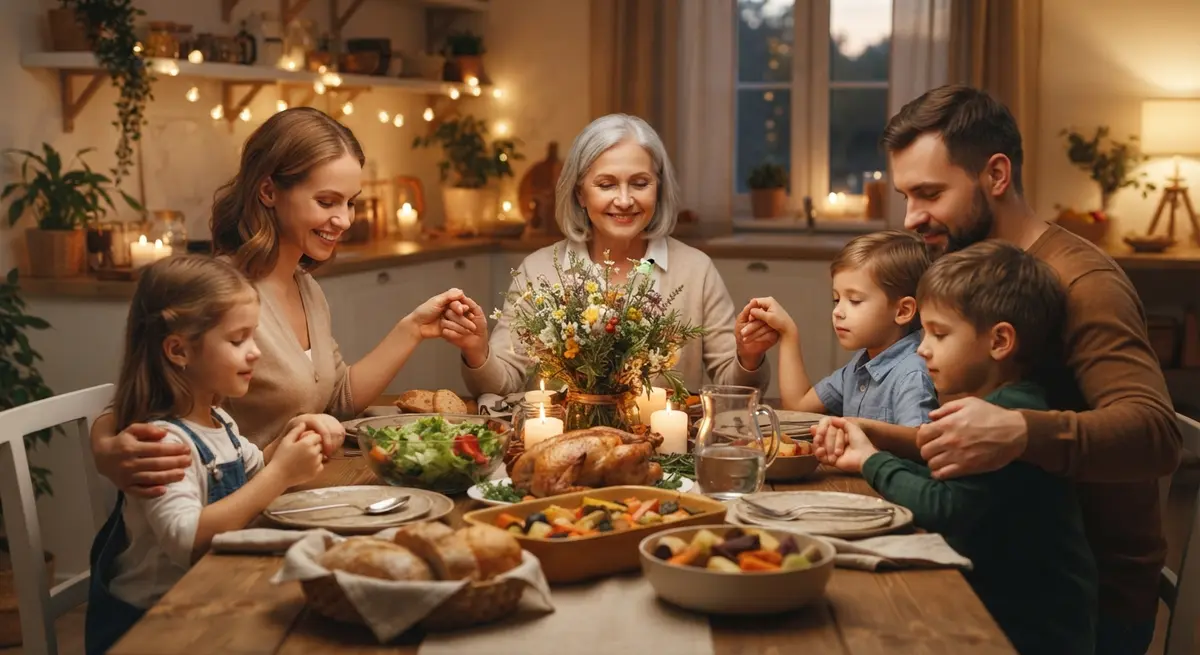
Ritual one: the thirty-second pause before the first bite. This is the big one, and it's small: place your plate, sit down, and spend thirty seconds looking at the food before you eat it. Name one thing you see, one thing you smell, and one person or source you're thankful for that put the food there. Then on the first bite, actually taste it. A 2011 study from Cornell's Food and Brand Lab found that people primed to pause and think about a meal's origins ate less while enjoying it more — a tiny demonstration that attention changes the eating experience.
Ritual two: trace the ingredient, once a night. Pick a single ingredient in the meal and give it a moment of thought: the blueberries came from a farm an hour away; the olive oil came from a grove your cousin visited on vacation; the stock was simmered by your own hands last weekend. Tracing one ingredient a night turns dinner into a story about the world, not just about calories.
Ritual three: the preparation gratitude moment. When your hands are mid-task — kneading dough, rolling pasta, stirring a sauce — spend one breath noticing the act itself: that you have the time to cook, the hands, the ingredients. This works best while chopping, because repetitive knife work is a natural time to breathe, and it's the moment I personally feel gratitude most reliably.
Pro tip: Attach each ritual to an anchor you already have — the pause happens when you set your fork down before the first bite; the ingredient trace happens when you lay out the ingredients before cooking; the preparation moment happens when the pan first sizzles. Anchored to existing moments, gratitude becomes part of the recipe instead of another thing on your to-do list.
Cooking for People: The Quietest Form of Thanks
Every gratitude researcher eventually lands on the same finding: expressing gratitude is more powerful than merely feeling it, and the expression matters most when it involves another person. Cooking for people is the perfect vehicle — a pot of soup for a new parent, pancakes for a tired spouse, a container of pasta dropped off at a friend's door. It's thanks you can hold.
This works in a few directions. When you cook for someone, you practice generosity, which researchers consistently link to wellbeing. When you receive a home-cooked meal, you're offered a concrete, personal form of caring. And when a meal is shared, the ritual of thanks can be spoken out loud — which is where gratitude practice grows its strongest roots.
A few ways to let cooking be your thanking voice:
- The gratitude special: once a week, make the dish someone in your house loved as a child. Food memory is gratitude with seasoning.
- The doorstep drop: a portion of any big batch cooking set aside for someone who needs it — new parents, a grieving friend, a busy student.
- The spoken thanks: while passing plates, name something specific you're grateful for about that person. Not a compliment; a specific observation.
- The hosted version: invite people over for a simple meal — soup and bread — where the point is presence, not perfection. Hosting humbly is an act of practical thanks.
Keeping Gratitude Alive When You Cook Alone Or For Yourself
Cooking for one can feel like the loneliest version of this whole practice, but it's actually where gratitude grows the hardest and matters the most. Solo cooking means you can be utterly selfish with your attention — and you can also build the rituals exactly as you like them.
Here's what worked for me during years of solo dinners:
- Make your favorite childhood meal, badly. The slightly-burnt lasagna your grandmother made, the instant mashed potatoes you loved. Cooking badly with love on purpose is a form of radical acceptance, and it lets gratitude in even when the result is imperfect.
- Keep a "tasting notes" habit. In one small notebook, write three lines about a meal you enjoyed: what it was, what you'd change, and one thing you're grateful it existed. Over a year, it becomes a personal archive of small happinesses.
- Sit at the table anyway. Even when you eat alone, plate it, sit down, and use the thirty-second pause. The job of a meal's gratitude isn't to perform for others; it's to register the moment for yourself.
- Name the invisible labor. Somewhere in a solo meal, give a mental thanks to the people who fed you first: the parent who taught you the pan flip, the friend who lent you the cookbook. Naming them keeps you connected to the chain of people that got you to your own table.
If you're cooking alone during a hard season — new city, grief, recovery — let the meal be a gentle anchor rather than a performance. Gratitude isn't forced in those seasons; it's a whisper, and the kitchen is a quiet place to hear it.
Weaving Gratitude Into a Whole Week
To make this a lifestyle rather than an occasional nice moment, build a gentle weekly rhythm around your cooking:
- Monday — the anchor meal. Carve out one dinner that gets the full ritual: the thirty-second pause, the ingredient trace, and a spoken expression of thanks, even if only to yourself.
- Wednesday — the preparation gratitude day. Use one cooking session, however small, to slow down and literally notice the act of cooking while your hands are in it.
- Friday — the kitchen diary. Write three lines about the week's food in your tasting-notes notebook, including one gratitude line per meal you really loved.
- Saturday or Sunday — the shared meal or the doorstep drop. Make gratitude social at least weekly, whether that's a hosted dinner or a delivered batch of soup.
Notice what this rhythm does: it makes gratitude a rotation rather than a mood. On any given day, only one small practice is in play, so nothing feels like a chore — and across the week, attention, appreciation, expression, and reflection have each had their turn.
Pro tip: If you keep a gratitude journal, let the kitchen feed it. Write "tonight I was grateful for ___" and finish it with a specific ingredient, flavor, or person connected to the meal. Kitchen-fed gratitude journals have a way of surviving longer than abstract ones — they have taste, smell, and memory behind them.
FAQ
Does gratitude practice actually reduce stress?
Research on gratitude practice shows modest, consistent associations with greater wellbeing, better sleep, and more positive mood in many studies. It's a real and useful practice. But it's not a treatment for depression, anxiety, or burnout — those deserve professional support. Gratitude is a seasoning, not a surgery, and that's honestly the right size for it.
Can I practice gratitude if I don't believe in anything spiritual?
Absolutely. This is a practice of attention, not faith. Thanking "the person who grew this tomato" or "the hands that cooked this stock" doesn't require any belief system — it just requires noticing that your food didn't appear by magic. The research on gratitude works the same way for secular and spiritual practitioners alike.
How do I teach gratitude to kids through food?
Make it a game, keep it specific, and repeat it until it's ritual. "Where did this apple come from?" and "Who grew our broccoli?" are adventures, not chores. Let kids pick the ingredient to trace, let them serve a plate with ceremony, and let them hear you say thank-you-for-this-meal litanies out loud. Kids absorb gratitude from the air around them.
I'm not a great cook. Does this still apply?
Gratitude is entirely indifferent to technique. Instant noodles, microwaved rice, and takeout containers all offer the same thirty-second pause, the same ingredient trace, the same chance to notice. Some of my most grateful dinners have been a perfect grilled cheese and a tomato that tastes like July. The cooking is only the stage; the attention is the show.
What if gratitude feels forced or fake some days?
Then you're doing the practice correctly. Forced-gratitude days are part of the research too — the value comes from the act of directing attention, not from feeling warm on command. On hard days, scale it to a single breath of thanks for a single thing, or skip the ritual with zero guilt and let the next meal carry it.
Key Takeaways
- Gratitude is a practice of attention and appreciation, and cooking provides the perfect five-sense laboratory for it.
- The three core rituals: the thirty-second pause before the first bite, tracing one ingredient per meal, and one breath of thanks mid-preparation.
- Expressing gratitude out loud and through cooking for others is more powerful than merely feeling it.
- Solo cooking can be the deepest gratitude practice of all — imperfect, personal, and quietly observed.
- Build a weekly rotation so gratitude is a rhythm, not a mood: anchor meal, prep day, kitchen diary, shared/delivered meal.
- Keep the practice honest: it's a support and a seasoning, not a treatment for anything bigger — see a professional for deeper struggles.
A Final Word
Somewhere between my burnt grilled cheese at seventeen and the quiet Tuesday onions at thirty, I learned that the kitchen's real recipe is the attention you bring to it. A meal is never just food; it's a knot of people, places, and labor that you can either ignore or notice. The noticing is the whole practice — the pause before the first bite, the thanks for one ingredient, the gift of a warm dish to someone else's door. Tonight, when you set your plate down, spend thirty seconds looking at it before your fork moves. You might find, as I did, that gratitude was already in the pan the whole time.
Published on 2026-08-13 by the QuiteRecipes team (Jamy & Kaïna).
Related Articles
Digital Detox at the Dinner Table: Simple Rules for Tech-Free Meals
A phone-free dinner table is possible without a mutiny. Try these simple rules, family agreements, and conversation games for tech-free meals that stick.
How to Create a Calming Sunday Reset Routine for a Better Week
Sunday scaries meet their match. Create a calming reset: thirty minutes of gentle tidying, a fifteen-minute plan, and a small ritual that builds a better week.

Hydration Beyond Water: Delicious Infused Water Combinations
Can't hit your daily water goal? Try these flavorful infused combinations with exact timings and pairings that turn plain water into a pleasure.
Mindful Eating: Simple Ways to Slow Down and Enjoy Every Meal
Mindful eating is simpler than it sounds. Learn practical techniques to slow down, savor your food, and feel genuinely satisfied at every meal.
About the Authors
This recipe and guide was developed, tested, and approved in our home kitchen and daily life. Jamy is a retired Food Service District Manager and Early Childhood Program Manager who spent his career overseeing multi-site restaurant operations, large-scale culinary production, and daycare menu management. Kaïna brings the ultimate real-world test: making sure it brings ease and joy to our kids on a busy weeknight.
Read more about our professional background and philosophy →